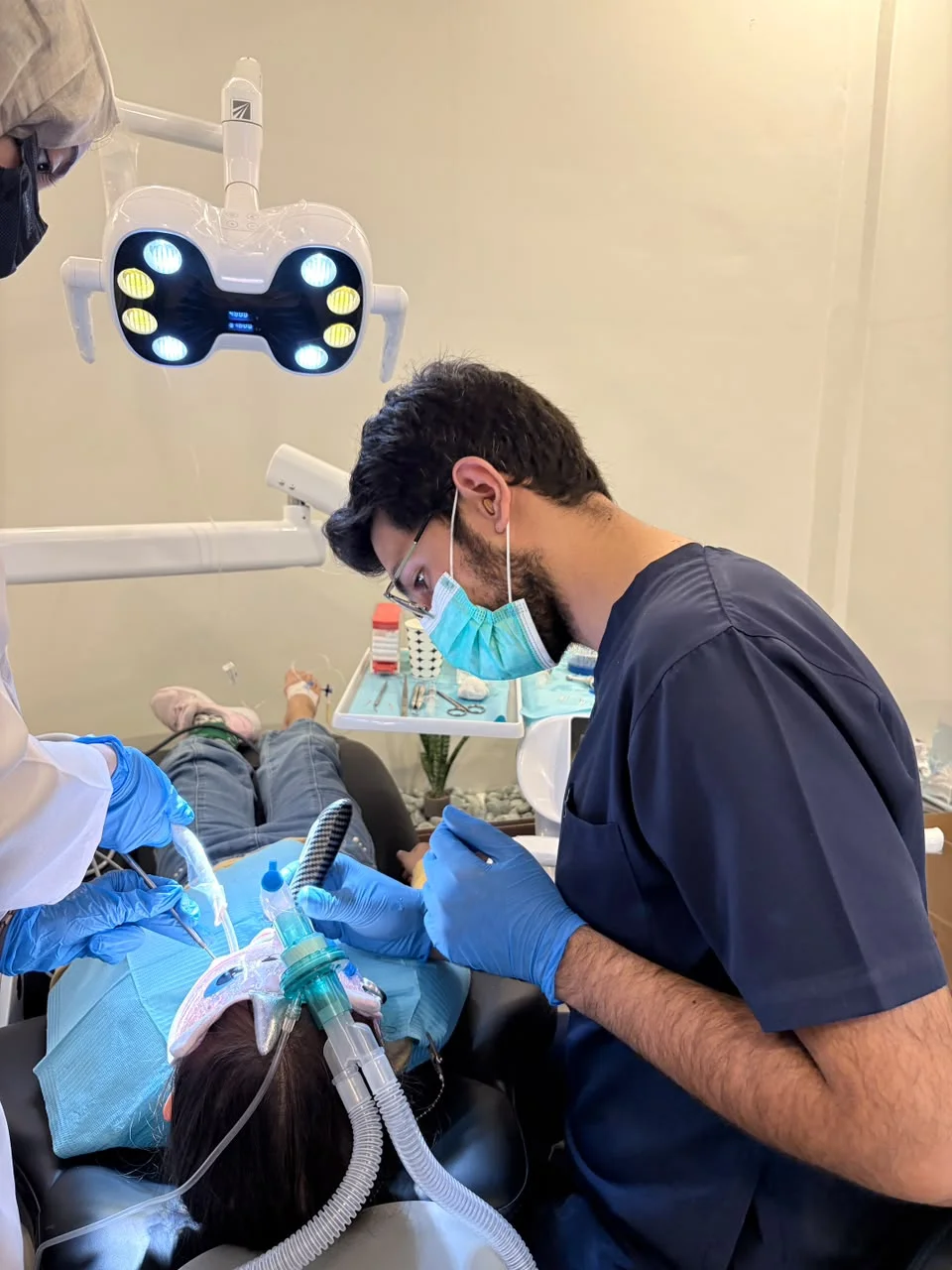
By Dr. Haider Rizwan, BDS (University of Health Sciences, Lahore), dentist at Olympus Dental & Aesthetics, G-8 Markaz, Islamabad.
Hearing that your child may need dental treatment under sedation can be worrying. Most parents have the same questions: Is it safe? Why can’t it be done the normal way? What happens on the day?
This guide answers those questions in plain language, so you can make an informed decision with your child’s dentist and anesthetist.
Why some children need sedation
Most children manage dental treatment with gentle care, clear explanations and local anesthetic. Sedation is considered when that is not enough to treat a child safely and kindly, for example:
- Very young children who need several fillings or crowns and cannot sit still for long.
- Children with severe dental anxiety, or a bad experience in the past.
- Children with special healthcare needs who find a dental visit overwhelming.
- Children who need a lot of treatment and would otherwise need many separate visits.
Sedation can make treatment calmer for the child and safer to carry out, and often allows all the treatment to be completed in one visit.
Levels of sedation, explained simply
Sedation is a scale, not an on-or-off switch. Medical and dental guidelines describe it in levels:
- Minimal sedation: the child is relaxed but fully awake.
- Moderate sedation: the child is drowsy but responds to voice or a light touch.
- Deep sedation: the child is in a deep sleep and is not easily woken, but is not under full general anesthesia.
- General anesthesia: the child is completely unconscious.
The deeper the level, the more important it is that a trained anesthesia professional gives the medicine and watches the child the whole time. Your anesthetist will explain which level is planned for your child and why.
How sedation is kept safe
Pediatric sedation guidelines from the American Academy of Pediatrics and the American Academy of Pediatric Dentistry set out a careful, step-by-step approach. The key safety steps are:
- A health assessment before the day, to check for conditions such as breathing problems, large tonsils, heart conditions or recent illness that could change the plan.
- Fasting instructions, because an empty stomach greatly reduces the risk of vomiting and breathing in stomach contents.
- A separate person responsible for the sedation, so the dentist can focus on the teeth while the anesthetist focuses on your child.
- Continuous monitoring of breathing, oxygen level and heart rate throughout treatment.
- Emergency equipment and trained staff ready in the room.
- Supervised recovery until your child is awake enough to go home safely.
Questions to ask before agreeing to sedation
- Why does my child need sedation, and what are the alternatives?
- Who will give and monitor the sedation, and what are their qualifications?
- What level of sedation is planned?
- What treatment will be done, and how long will it take?
- What are the fasting rules, in writing?
- Where will my child recover, and when can we go home?
- Who do I call if I am worried afterwards?
A good clinic will be happy to answer every one of these.
Preparing your child
- Follow the fasting instructions exactly. Your anesthetist will tell you when your child must stop eating and drinking. If your child eats or drinks after that time, tell the team. The treatment may need to be moved for safety.
- Tell the team if your child is unwell with a cold, cough, fever or tummy bug in the days before. Sedation is usually postponed.
- Dress your child in loose, comfortable clothes, and bring a favourite toy or blanket.
- Keep explanations simple and calm: “The doctor will give you special sleepy medicine, and when you wake up your teeth will be fixed.”
- Plan for two adults on the journey home if possible, so one can sit with your child.
What to expect on the day
- A final check of your child’s health and the fasting time.
- The anesthetist gives the sedation medicine, while you stay close to help your child feel safe.
- Once your child is asleep, the dentist completes the planned treatment while the anesthetist monitors your child.
- Your child wakes up in a recovery area and is watched until they are ready to go home.
After sedation: care at home
- Your child may be sleepy, wobbly or emotional for the rest of the day. This is normal.
- Stay with your child and supervise them closely. No bikes, swings or climbing for the rest of the day.
- Start with sips of water and soft, easy food once your child is fully awake, following the team’s advice.
- If your child had local anesthetic, watch that they do not bite their numb lip or cheek.
- Call the clinic straight away if your child is very hard to wake, has trouble breathing, keeps vomiting, or you are worried.
Sedation dentistry with Dr. Haider in Islamabad
At Olympus Dental & Aesthetics in G-8 Markaz, Dr. Haider Rizwan provides clinic-based deep sedation for children with a specialist anesthetist. Every child has an assessment visit first, and parents can stay close throughout. Read more about deep sedation dentistry for children and special needs dentistry.
Frequently asked questions
Is dental sedation safe for children?
When it follows pediatric sedation guidelines, with a health assessment, proper fasting, a dedicated anesthesia professional, continuous monitoring and supervised recovery, sedation has a strong safety record. Your anesthetist will discuss any risks specific to your child.
Is deep sedation the same as general anesthesia?
No. They are next to each other on the same scale. In deep sedation a child is in a deep sleep but is not fully unconscious. Your anesthetist will explain which level is planned.
Why must my child not eat before sedation?
An empty stomach reduces the risk of vomiting and breathing stomach contents into the lungs while your child is sedated. Always follow the exact times your anesthetist gives you.
Can I stay with my child?
Usually you can stay close while the sedation begins and be there as your child wakes up. The team will explain what is possible on the day.
Medical disclaimer: This article is for general information only and is not a substitute for a professional dental examination. Please consult a qualified dentist about your own situation or your child’s.
Leave a Reply