Category: Dental Health Guides

  • Pulpotomy Explained: The “Baby Root Canal” for Milk Teeth

    Pulpotomy Explained: The “Baby Root Canal” for Milk Teeth

    By Dr. Haider Rizwan, BDS (University of Health Sciences, Lahore), dentist at Olympus Dental & Aesthetics, G-8 Markaz, Islamabad.

    If your dentist has said your child needs a “pulpotomy” or a “baby root canal”, you probably have questions. This guide explains what it is, why it is done and what to expect.

    What is a pulpotomy?

    Every tooth has a soft centre called the pulp, which contains the nerve and blood vessels. When decay in a milk tooth gets deep enough to reach the pulp, the tooth can become painful and infected.

    In a pulpotomy, the dentist removes the infected part of the pulp from the crown of the tooth, treats the healthy pulp left in the roots with a medicated material, and then seals the tooth. Most teeth that have a pulpotomy are then covered with a stainless steel crown to protect them.

    Why not just take the tooth out?

    • The milk tooth holds the space for the adult tooth underneath. Losing it early can let neighbouring teeth drift.
    • Keeping the tooth lets your child chew comfortably until it falls out naturally.
    • A treated tooth avoids the need for a space maintainer in many cases.

    Sometimes a tooth is too badly damaged or infected to save, and extraction is the better option. Your dentist will explain why.

    Signs a milk tooth may need a pulpotomy

    • A deep cavity visible on a back tooth.
    • Toothache, especially when eating sweet or cold food.
    • Pain that wakes your child at night.
    • A tooth that is sensitive to biting.

    Swelling of the gum or face, or a pimple on the gum, can mean the infection has spread. That needs to be seen promptly, and sometimes a different treatment is needed.

    What happens during the treatment

    1. The tooth is numbed with local anesthetic, after a numbing gel on the gum.
    2. A small rubber sheet may be placed to keep the tooth clean and dry.
    3. The decay and the infected top part of the pulp are removed.
    4. A medicated material is placed over the remaining pulp.
    5. The tooth is sealed and usually covered with a crown in the same visit.

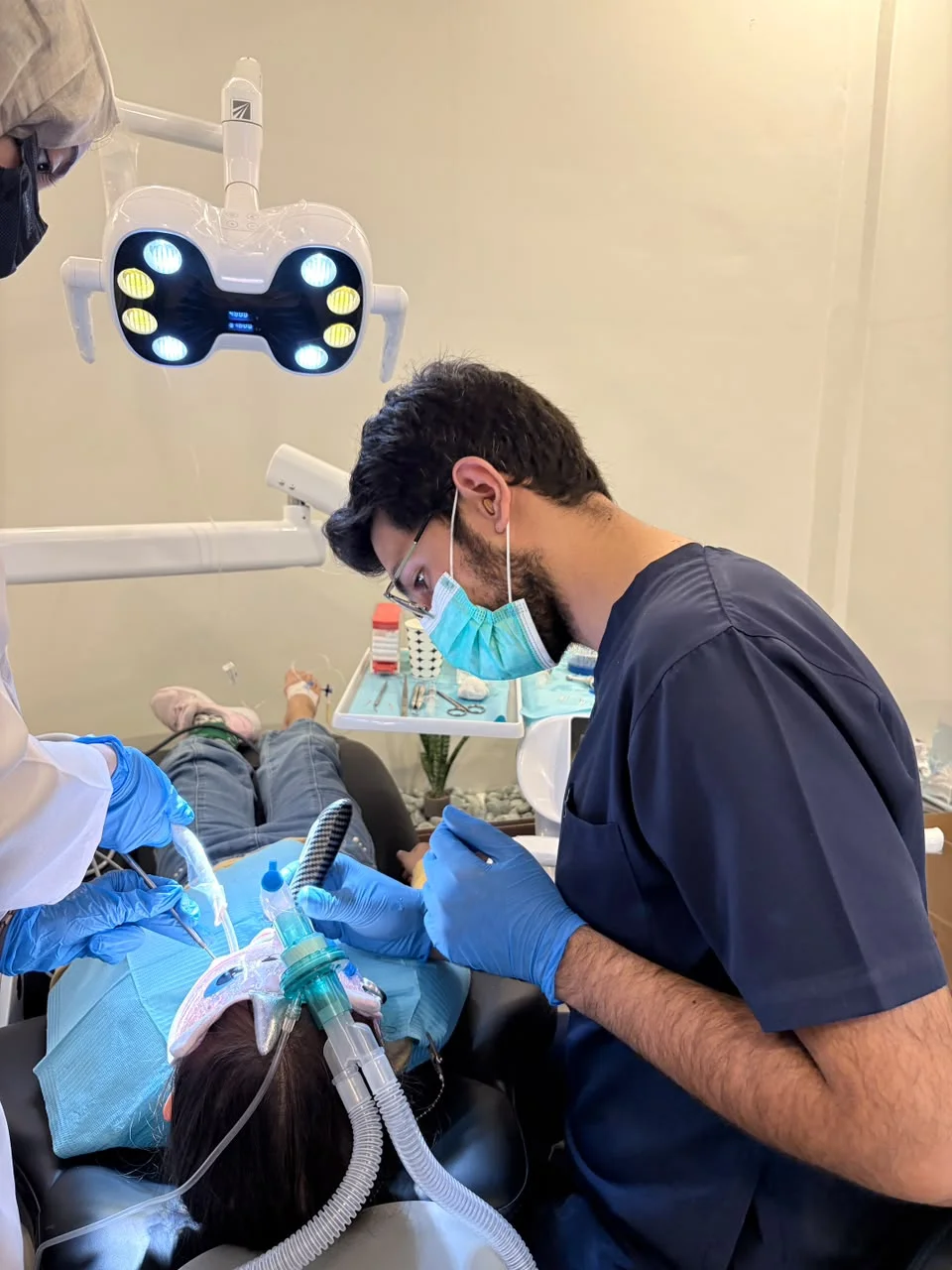
    The whole appointment usually takes around 30 to 45 minutes per tooth. For children who need several teeth treated, or who find dental visits very difficult, treatment can be done in one visit under deep sedation.

    Does it hurt?

    With local anesthetic, the treatment itself should not be painful. Your child may feel pressure and hear the sounds of the instruments. Afterwards, the tooth and gum may feel a little sore for a day or two.

    Aftercare at home

    • Watch that your child does not bite their numb lip or cheek until the feeling returns.
    • Offer soft food for the rest of the day.
    • If your child is uncomfortable, ask your pharmacist about a children’s pain reliever and follow the dose on the label for their age and weight.
    • Keep brushing the treated tooth gently, twice a day.
    • Call the clinic if there is swelling, fever, or pain that gets worse after two days.

    Children’s dentistry with Dr. Haider in Islamabad

    Dr. Haider Rizwan provides pulpotomies and crowns for children at Olympus Dental & Aesthetics in G-8 Markaz, Islamabad, with sedation available when needed. Read more about children’s dentistry and why milk teeth are worth saving.

    Frequently asked questions

    What is a pulpotomy in a child?

    A pulpotomy is a treatment for a milk tooth with deep decay. The infected part of the nerve in the crown is removed, the rest is treated, and the tooth is sealed and usually crowned.

    Is a pulpotomy the same as a root canal?

    They are related. A pulpotomy removes only the top part of the pulp in a milk tooth, while a full root canal cleans the whole root canal system. Parents often call a pulpotomy a baby root canal.

    Does a pulpotomy hurt?

    The tooth is numbed with local anesthetic, so treatment should not be painful. The area may feel slightly sore for a day or two afterwards.


    Medical disclaimer: This article is for general information only and is not a substitute for a professional dental examination. Please consult a qualified dentist about your own situation or your child’s.

  • Do Baby Teeth Need Fillings? Why Milk Teeth Matter

    Do Baby Teeth Need Fillings? Why Milk Teeth Matter

    By Dr. Haider Rizwan, BDS (University of Health Sciences, Lahore), dentist at Olympus Dental & Aesthetics, G-8 Markaz, Islamabad.

    “They’re only milk teeth, they’ll fall out anyway.” It is one of the most common things parents tell us, and it is easy to understand why. But some baby teeth stay in the mouth until a child is 11 or 12 years old, and what happens to them affects your child’s comfort, health and adult teeth.

    Why milk teeth are important

    • Eating: children need comfortable teeth to chew a healthy, varied diet.
    • Speech: front teeth help children form sounds clearly.
    • Space for adult teeth: each milk tooth holds a space for the adult tooth underneath. If one is lost early, nearby teeth can drift and the adult teeth may come through crooked.
    • Confidence: children notice dark or broken teeth, and so do their classmates.
    • Lifelong habits: a child who has good experiences at the dentist is more likely to look after their teeth as an adult.

    When do baby teeth fall out?

    The front teeth usually loosen from around 6 or 7 years old. The back milk molars, the teeth most likely to get cavities, often stay until 10 to 12 years old. A cavity in a milk molar at age 4 may need to last another six or seven years.

    What happens if decay is not treated?

    Decay spreads faster in milk teeth than in adult teeth, because the enamel is thinner. If it is left:

    1. It reaches the nerve (the pulp) and causes toothache, often at night.
    2. The nerve can become infected, leading to an abscess, swelling of the face and sometimes fever.
    3. Infection around the roots of a milk tooth can affect the adult tooth developing underneath.
    4. The tooth may eventually need to be taken out, which can cause space problems for the adult teeth.

    Children with toothache often don’t complain directly. Instead they sleep badly, refuse food, chew on one side or become irritable.

    What treatment involves

    The right treatment depends on how deep the decay is:

    • Very early decay: fluoride varnish and better brushing may be enough to stop it.
    • Small cavity: a tooth-coloured filling.
    • Larger cavity: a stainless steel crown, which covers and protects the whole tooth.
    • Decay reaching the nerve: a pulpotomy (often called a baby root canal), usually followed by a crown.
    • Tooth that cannot be saved: extraction, sometimes with a space maintainer to keep room for the adult tooth.

    Treatment for children is done gently, with numbing gel before any injection and plenty of breaks. For young children who need several teeth treated, or who are too anxious to manage, treatment under deep sedation allows everything to be done safely in one visit.

    Children’s dentistry with Dr. Haider in Islamabad

    Dr. Haider Rizwan treats milk teeth every day at Olympus Dental & Aesthetics, G-8 Markaz. He will explain every option and its cost before starting, so you can decide what is best for your child. Read more about children’s dentistry or tooth decay in toddlers.

    Frequently asked questions

    Should cavities in baby teeth be filled?

    Usually yes. Untreated decay in milk teeth can cause pain, infection and problems for the adult teeth. Some milk molars stay until age 11 or 12, so they need to stay healthy for years.

    What happens if a baby tooth with a cavity is left?

    The decay can reach the nerve, causing toothache and infection. An abscess around a milk tooth can affect the adult tooth developing underneath.

    Is filling a baby tooth painful?

    Treatment is done gently, with numbing gel and local anesthetic so the child does not feel pain. For very young or anxious children, sedation is an option.


    Medical disclaimer: This article is for general information only and is not a substitute for a professional dental examination. Please consult a qualified dentist about your own situation or your child’s.
  • Tooth Decay in Toddlers: Signs, Causes and How to Prevent It

    Tooth Decay in Toddlers: Signs, Causes and How to Prevent It

    By Dr. Haider Rizwan, BDS (University of Health Sciences, Lahore), dentist at Olympus Dental & Aesthetics, G-8 Markaz, Islamabad.

    Many parents are surprised to learn that tooth decay can begin as soon as a baby’s first teeth come through. In fact, decay in young children, often called early childhood caries or “bottle tooth decay”, is one of the most common problems we see in toddlers in Islamabad.

    The good news is that it is almost entirely preventable, and caught early, it can often be stopped before it needs a filling.

    Early signs of tooth decay in toddlers

    Decay usually starts on the upper front teeth, near the gums, because these teeth are bathed in milk or juice during feeds. Look out for:

    • Chalky white lines or spots along the gum line. This is the earliest stage, and it can often be reversed.
    • Yellow, brown or black patches on the teeth.
    • Small holes or chipped edges on the front teeth.
    • Sensitivity or refusing food, especially cold or sweet things.
    • Swelling of the gum or a pimple-like bump near a tooth, which can be a sign of infection.

    Lift your child’s top lip once a month and look closely at the front teeth in good light. It takes ten seconds and is the easiest way to catch decay early.

    What causes it?

    Decay happens when bacteria in the mouth feed on sugars and produce acid that softens the enamel. In toddlers, the biggest risks are about how often teeth are exposed to sugar, not just how much:

    • Falling asleep with a bottle of milk, formula or juice.
    • Sipping milk, juice or sweetened tea from a bottle or sippy cup throughout the day.
    • Frequent snacks such as biscuits, rusks, chips and sweets between meals.
    • Not brushing twice a day with fluoride toothpaste.
    • Sharing spoons or cleaning a dummy in a parent’s mouth, which passes decay-causing bacteria to the child.

    How to protect your toddler’s teeth

    1. Brush twice a day, morning and bedtime, with a smear of fluoride toothpaste the size of a grain of rice (under 3 years) or a pea-sized amount (3 years and over).
    2. Make bedtime brushing the last thing before sleep. Nothing but water afterwards.
    3. Don’t put your child to bed with a bottle of anything except water.
    4. Move to a cup from around the first birthday.
    5. Keep sweet foods and drinks to mealtimes, and offer water between meals.
    6. Book a first dental visit by the first birthday, then check-ups every six months.

    Can early decay be reversed?

    White spot lesions, the very first stage, can often be hardened again with better brushing, fewer sugary snacks and professional fluoride varnish. Once a hole has formed, the tooth needs treatment. Depending on how deep the decay is, that may be a filling, a pulpotomy or a stainless steel crown.

    Leaving decay in baby teeth is not a safe option. It can cause pain, infection and swelling, and it can affect the adult teeth developing underneath. Read more in do baby teeth need fillings?

    Children’s dentistry with Dr. Haider in Islamabad

    Dr. Haider Rizwan checks toddlers’ teeth gently, usually with the child sitting on a parent’s lap. He can spot early decay, apply fluoride varnish and give you a simple plan for home. For young children who need a lot of treatment, treatment under sedation is available at the clinic. Learn more about children’s dentistry at our G-8 clinic.

    Frequently asked questions

    What does early tooth decay look like in toddlers?

    The earliest sign is chalky white lines or spots near the gums on the upper front teeth. Later it turns yellow, brown or black, and small holes can appear.

    Can I put my baby to sleep with milk?

    Once teeth have come through, avoid putting your child to bed with a bottle of milk, formula or juice. Brush last thing at night and offer only water afterwards.

    Can tooth decay in toddlers be reversed?

    The very earliest white spot stage can often be stopped and hardened with fluoride, better brushing and less frequent sugar. Once a hole has formed, the tooth needs treatment.


    Medical disclaimer: This article is for general information only and is not a substitute for a professional dental examination. Please consult a qualified dentist about your own situation or your child’s.
  • Scared of the Dentist? How to Overcome Dental Anxiety

    Scared of the Dentist? How to Overcome Dental Anxiety

    By Dr. Haider Rizwan, BDS (University of Health Sciences, Lahore), dentist at Olympus Dental & Aesthetics, G-8 Markaz, Islamabad.

    If the thought of a dental appointment makes your heart race, you are not alone. Dental anxiety is one of the most common fears, among teenagers and adults alike. Many people put off visits for years, until a toothache forces them to go, which often means more treatment and more of the very thing they were afraid of.

    Fear of the dentist is real, and it is not something to be embarrassed about. It is also very treatable. Here is how to take the first step.

    Where dental fear comes from

    • A painful or frightening experience in the past, often in childhood.
    • Feeling out of control while lying back in the chair.
    • Fear of needles, the sound of the drill, or gagging.
    • Embarrassment about the state of your teeth after a long gap.
    • Worry about being judged or lectured.

    Understanding what triggers your fear helps you and your dentist plan around it.

    Small steps that make a big difference

    1. Tell the clinic when you book. Saying “I’m nervous about the dentist” lets the team plan more time and a calmer visit.
    2. Start with a consultation only. Meet the dentist, talk, and leave without any treatment if that is what you need.
    3. Agree a stop signal. Raising your hand means the dentist stops immediately. Knowing you are in control lowers anxiety.
    4. Ask for explanations before each step, or ask the dentist not to describe things if that makes you more anxious.
    5. Choose a good time. An early appointment means less time to worry during the day.
    6. Bring headphones and listen to music or a podcast during treatment.
    7. Practise slow breathing: breathe in for four counts, out for six, and repeat.
    8. Bring someone you trust to the appointment.

    What a gentle dentist will do differently

    • Listen to your worries without judgement, whatever the condition of your teeth.
    • Explain your options and costs clearly, then let you decide.
    • Use a numbing gel before an injection, and give the injection slowly.
    • Take regular breaks, and check how you are feeling.
    • Start with the simplest, most comfortable treatment to build your confidence.

    Options for severe dental anxiety

    For some people, even with all of these steps, treatment in the chair feels impossible. In that case, ask your dentist about sedation. Depending on your health and the treatment needed, sedation can help you stay relaxed or asleep while the dental work is done, with a trained professional monitoring you throughout.

    Sedation is not right for everyone, and it always needs a health assessment first. But for people with severe fear, it can make the difference between getting treatment and avoiding it for years.

    Helping an anxious teenager

    • Let them speak to the dentist directly, so they feel respected and in control.
    • Avoid sharing your own bad dental experiences in front of them.
    • Focus on what they gain, such as a pain-free mouth and a confident smile, rather than what might go wrong.
    • Praise them for going, even if the visit is just a check-up.

    Why it is worth taking the first step

    Small dental problems are usually quick and simple to fix. Left alone, they can turn into toothache, infection and much bigger treatment. A single calm visit, with a dentist who understands anxiety, is often enough to break the cycle of fear and avoidance.

    Gentle care for anxious patients with Dr. Haider

    Dr. Haider Rizwan cares for anxious teenagers and adults at Olympus Dental & Aesthetics in G-8 Markaz, Islamabad. He never rushes nervous patients, and he explains every option before treatment begins. Read more about gentle dentistry for anxious patients, or meet Dr. Haider.

    Frequently asked questions

    Is it normal to be scared of the dentist?

    Yes. Dental anxiety is very common in teenagers and adults, and dentists are used to helping nervous patients feel more comfortable.

    Can I just have a consultation without treatment?

    Yes. Many anxious patients start with a talk and an examination only, and plan treatment once they feel ready.

    Can I be sedated for dental treatment if I am very anxious?

    Sedation may be an option for severe dental anxiety, depending on your health and the treatment needed. It always needs a health assessment first, so ask your dentist.

    What should I say when I book?

    Simply tell the clinic you are nervous. That lets the team give you more time and plan a calmer visit.


    Medical disclaimer: This article is for general information only and is not a substitute for a professional dental examination. Please consult a qualified dentist about your own situation or your child’s.

  • Dental Care for Children With Autism and Special Needs: Tips for Parents

    Dental Care for Children With Autism and Special Needs: Tips for Parents

    By Dr. Haider Rizwan, BDS (University of Health Sciences, Lahore), dentist at Olympus Dental & Aesthetics, G-8 Markaz, Islamabad.

    For many families of children with autism, ADHD, Down syndrome, cerebral palsy or other special healthcare needs, the dentist can feel like one of the hardest appointments of all. Bright lights, strange sounds, being touched in the mouth and lying back in a chair can all be overwhelming.

    The good news is that with the right preparation and a dentist who adapts to your child, dental care can become much easier. Here are practical tips for home and for the clinic.

    Why dental care matters even more

    • Some children find brushing very difficult, so plaque builds up more easily.
    • Some medicines contain sugar or cause a dry mouth, which increases the risk of decay.
    • Some children have restricted diets, prefer soft or sweet foods, or hold food in their mouth.
    • Children who cannot easily tell you they are in pain may show it through changes in behaviour, sleep or eating instead.

    Regular check-ups catch problems while they are small, which often means simpler treatment.

    Making brushing easier at home

    • Keep the same routine: same time, same place, same order of steps every day.
    • Use a visual schedule with pictures for each step: toothpaste, brush top teeth, brush bottom teeth, spit.
    • Try different toothbrushes. Some children prefer a very soft brush, a brush with a chunky handle, or an electric brush once they are used to the vibration.
    • Choose a mild-flavoured or unflavoured toothpaste if strong mint is a problem, but keep it a fluoride toothpaste.
    • Find a comfortable position. Sitting behind your child, or with their head resting on your lap, can help you see and keep them steady.
    • Count or sing so your child knows when brushing will end.
    • Praise every small step, even if you only managed a few teeth today.

    Preparing for a dental visit

    • Tell the clinic about your child when you book: their diagnosis, how they communicate, what helps them, and what upsets them.
    • Ask for the first appointment of the day or a quiet time, so there is less waiting.
    • Use a social story with photos or simple drawings of the clinic, the chair and the dentist.
    • Practise at home: lie back on a sofa, open wide, and count teeth with a toothbrush or a spoon.
    • Bring comfort items: headphones, sunglasses for bright lights, a weighted blanket, or a favourite toy.
    • Plan a reward your child looks forward to after the visit.

    What a good special needs dentist will do

    • Listen to you first. You know your child best.
    • Take things step by step, and stop before your child becomes distressed.
    • Use short, simple words or pictures, and explain what will happen before doing it.
    • Reduce noise, light and waiting where possible.
    • Offer several short “getting to know you” visits if your child needs them.
    • Discuss sedation if treatment is needed and cannot be done safely while your child is awake.

    When sedation is the kinder option

    Some children cannot manage treatment in the chair however gently it is done. Holding a frightened child down is not a good answer. For these children, treatment under sedation with a specialist anesthetist can allow all the necessary dental work to be done safely in one visit, without distress. Read our parent’s guide to dental treatment under sedation.

    Signs your child may have a dental problem

    • Refusing food they normally like, or chewing on one side only.
    • Hitting or rubbing the face or jaw, or putting hands in the mouth more than usual.
    • New problems with sleep or more irritability than usual.
    • Bad breath, bleeding gums, swelling, or dark spots on the teeth.

    If you notice any of these, book a check-up. Pain from teeth is common and very treatable.

    Special needs dentistry with Dr. Haider

    Dr. Haider Rizwan cares for children with special healthcare needs at Olympus Dental & Aesthetics in G-8 Markaz, Islamabad. Visits are adapted to each child, and clinic-based deep sedation with a specialist anesthetist is available when needed. Learn more about special needs dentistry at our clinic.

    Frequently asked questions

    How can I make brushing easier for my autistic child?

    Keep the same routine every day, use a picture schedule, try different brushes and mild-flavoured fluoride toothpaste, and count or sing so your child knows when it will end.

    How do I prepare my child with special needs for the dentist?

    Tell the clinic about your child when booking, choose a quiet appointment time, use a social story, practise opening wide at home, and bring comfort items such as headphones.

    Will my child need sedation for dental treatment?

    Not always. Many children manage check-ups and simple treatment with an adapted approach. Sedation is considered when treatment cannot be done safely and kindly while the child is awake.


    Medical disclaimer: This article is for general information only and is not a substitute for a professional dental examination. Please consult a qualified dentist about your own situation or your child’s.

  • Dental Treatment Under Sedation for Children: A Parent’s Guide

    Dental Treatment Under Sedation for Children: A Parent’s Guide

    By Dr. Haider Rizwan, BDS (University of Health Sciences, Lahore), dentist at Olympus Dental & Aesthetics, G-8 Markaz, Islamabad.

    Hearing that your child may need dental treatment under sedation can be worrying. Most parents have the same questions: Is it safe? Why can’t it be done the normal way? What happens on the day?

    This guide answers those questions in plain language, so you can make an informed decision with your child’s dentist and anesthetist.

    Why some children need sedation

    Most children manage dental treatment with gentle care, clear explanations and local anesthetic. Sedation is considered when that is not enough to treat a child safely and kindly, for example:

    • Very young children who need several fillings or crowns and cannot sit still for long.
    • Children with severe dental anxiety, or a bad experience in the past.
    • Children with special healthcare needs who find a dental visit overwhelming.
    • Children who need a lot of treatment and would otherwise need many separate visits.

    Sedation can make treatment calmer for the child and safer to carry out, and often allows all the treatment to be completed in one visit.

    Levels of sedation, explained simply

    Sedation is a scale, not an on-or-off switch. Medical and dental guidelines describe it in levels:

    • Minimal sedation: the child is relaxed but fully awake.
    • Moderate sedation: the child is drowsy but responds to voice or a light touch.
    • Deep sedation: the child is in a deep sleep and is not easily woken, but is not under full general anesthesia.
    • General anesthesia: the child is completely unconscious.

    The deeper the level, the more important it is that a trained anesthesia professional gives the medicine and watches the child the whole time. Your anesthetist will explain which level is planned for your child and why.

    How sedation is kept safe

    Pediatric sedation guidelines from the American Academy of Pediatrics and the American Academy of Pediatric Dentistry set out a careful, step-by-step approach. The key safety steps are:

    1. A health assessment before the day, to check for conditions such as breathing problems, large tonsils, heart conditions or recent illness that could change the plan.
    2. Fasting instructions, because an empty stomach greatly reduces the risk of vomiting and breathing in stomach contents.
    3. A separate person responsible for the sedation, so the dentist can focus on the teeth while the anesthetist focuses on your child.
    4. Continuous monitoring of breathing, oxygen level and heart rate throughout treatment.
    5. Emergency equipment and trained staff ready in the room.
    6. Supervised recovery until your child is awake enough to go home safely.

    Questions to ask before agreeing to sedation

    • Why does my child need sedation, and what are the alternatives?
    • Who will give and monitor the sedation, and what are their qualifications?
    • What level of sedation is planned?
    • What treatment will be done, and how long will it take?
    • What are the fasting rules, in writing?
    • Where will my child recover, and when can we go home?
    • Who do I call if I am worried afterwards?

    A good clinic will be happy to answer every one of these.

    Preparing your child

    • Follow the fasting instructions exactly. Your anesthetist will tell you when your child must stop eating and drinking. If your child eats or drinks after that time, tell the team. The treatment may need to be moved for safety.
    • Tell the team if your child is unwell with a cold, cough, fever or tummy bug in the days before. Sedation is usually postponed.
    • Dress your child in loose, comfortable clothes, and bring a favourite toy or blanket.
    • Keep explanations simple and calm: “The doctor will give you special sleepy medicine, and when you wake up your teeth will be fixed.”
    • Plan for two adults on the journey home if possible, so one can sit with your child.

    What to expect on the day

    1. A final check of your child’s health and the fasting time.
    2. The anesthetist gives the sedation medicine, while you stay close to help your child feel safe.
    3. Once your child is asleep, the dentist completes the planned treatment while the anesthetist monitors your child.
    4. Your child wakes up in a recovery area and is watched until they are ready to go home.

    After sedation: care at home

    • Your child may be sleepy, wobbly or emotional for the rest of the day. This is normal.
    • Stay with your child and supervise them closely. No bikes, swings or climbing for the rest of the day.
    • Start with sips of water and soft, easy food once your child is fully awake, following the team’s advice.
    • If your child had local anesthetic, watch that they do not bite their numb lip or cheek.
    • Call the clinic straight away if your child is very hard to wake, has trouble breathing, keeps vomiting, or you are worried.

    Sedation dentistry with Dr. Haider in Islamabad

    At Olympus Dental & Aesthetics in G-8 Markaz, Dr. Haider Rizwan provides clinic-based deep sedation for children with a specialist anesthetist. Every child has an assessment visit first, and parents can stay close throughout. Read more about deep sedation dentistry for children and special needs dentistry.

    Frequently asked questions

    Is dental sedation safe for children?

    When it follows pediatric sedation guidelines, with a health assessment, proper fasting, a dedicated anesthesia professional, continuous monitoring and supervised recovery, sedation has a strong safety record. Your anesthetist will discuss any risks specific to your child.

    Is deep sedation the same as general anesthesia?

    No. They are next to each other on the same scale. In deep sedation a child is in a deep sleep but is not fully unconscious. Your anesthetist will explain which level is planned.

    Why must my child not eat before sedation?

    An empty stomach reduces the risk of vomiting and breathing stomach contents into the lungs while your child is sedated. Always follow the exact times your anesthetist gives you.

    Can I stay with my child?

    Usually you can stay close while the sedation begins and be there as your child wakes up. The team will explain what is possible on the day.


    Medical disclaimer: This article is for general information only and is not a substitute for a professional dental examination. Please consult a qualified dentist about your own situation or your child’s.

  • When Should Your Child First Visit a Dentist?

    When Should Your Child First Visit a Dentist?

    By Dr. Haider Rizwan, BDS (University of Health Sciences, Lahore), dentist at Olympus Dental & Aesthetics, G-8 Markaz, Islamabad.

    Many parents in Islamabad wait until their child has a toothache before visiting a dentist. By then, a small problem has often become a painful one. Dentists now recommend a much earlier start: a first visit within six months of the first tooth appearing, and no later than your child’s first birthday.

    That can sound early for a baby with only a few teeth. This guide explains why it matters, what actually happens at that first visit, and how to look after your child’s teeth at home.

    The short answer: by the first birthday

    The American Academy of Pediatric Dentistry recommends that a child’s first dental check-up takes place within six months of the first tooth coming through, and by 12 months of age at the latest. Most babies get their first tooth between 6 and 10 months, so for most families this means a visit around the first birthday.

    If your child is older and has never seen a dentist, that is fine. The best time to start is now. There is no age that is “too late” for a first visit.

    Why so early?

    • Tooth decay can start very young. Milk teeth have thin enamel, and decay can spread quickly, especially with night-time bottle or breast feeding once teeth are present.
    • Early visits prevent problems. A check-up at one year is mostly about prevention and advice, not treatment.
    • It builds trust. A child whose first dental visits are calm and friendly is far less likely to become an anxious patient later.
    • Parents get practical guidance. How much toothpaste to use, how to brush a wriggling toddler, and which habits to change.

    What happens at the first visit

    A first visit is short and gentle. For babies and toddlers it is usually done with your child sitting on your lap, facing you, while the dentist looks in from behind. There are no needles and no drills.

    1. A chat with you about feeding, brushing, any medical conditions, and anything you have noticed.
    2. A quick look at your child’s teeth, gums, jaw and bite.
    3. A risk check for tooth decay, based on diet, habits and what the dentist sees.
    4. Advice for home: brushing technique, toothpaste amount, and healthy eating and drinking habits.
    5. A plan for when to come back, usually every six months.

    If your child cries, that is completely normal at this age and does not mean the visit went badly. The dentist can still see what they need to.

    How to prepare your child

    • Book a time when your child is usually rested and fed, not at nap time.
    • Talk about the visit in a positive, simple way: “The dentist is going to count your teeth.”
    • Avoid words like “hurt”, “injection” or “drill”, and do not use the dentist as a threat.
    • Read a picture book about visiting the dentist, or play “dentist” at home with a toy.
    • Stay calm yourself. Children quickly pick up on a parent’s worry.

    Caring for baby teeth at home

    Milk teeth matter. They help your child chew, speak clearly and hold space for the adult teeth. Here is what dental guidelines recommend:

    • Start brushing as soon as the first tooth appears, twice a day, with a small soft toothbrush.
    • Under 3 years: use a smear of fluoride toothpaste about the size of a grain of rice.
    • Age 3 to 6: use a pea-sized amount of fluoride toothpaste.
    • Spit, don’t rinse. After brushing, let your child spit out the extra toothpaste but avoid rinsing with water, so the fluoride keeps working.
    • Help with brushing until your child is around 7 or 8 years old. Young children cannot clean all their teeth properly on their own.

    Habits that protect your child’s teeth

    • Avoid putting your child to sleep with a bottle of milk, formula or juice.
    • Offer water between meals instead of juice or sweet drinks.
    • Keep sweets, biscuits and sugary snacks to mealtimes rather than all day long.
    • Encourage drinking from a cup from around the first birthday.
    • Do not clean a dummy (pacifier) in your own mouth or share spoons, as this can pass decay-causing bacteria to your child.

    When to see a dentist sooner

    Book a visit straight away if you notice white, brown or black spots on the teeth, a tooth that looks broken, swelling of the gums or face, bleeding gums, or if your child has had a fall that has hit their teeth.

    Your child’s first visit with Dr. Haider

    Dr. Haider Rizwan sees babies, toddlers and older children at Olympus Dental & Aesthetics in G-8 Markaz, Islamabad. First visits are relaxed and unhurried, and parents stay with their child throughout. Read more about children’s dentistry at our clinic, or see how to choose a dentist in Islamabad.

    Frequently asked questions

    At what age should my child first see a dentist?

    Within six months of the first tooth appearing, and no later than the first birthday.

    Does my baby need a dental visit if they only have a few teeth?

    Yes. The first visit is mainly about prevention and advice, and it is easiest to prevent decay when teeth first come through.

    How much toothpaste should a toddler use?

    For children under 3, use a smear of fluoride toothpaste the size of a grain of rice. From age 3 to 6, use a pea-sized amount.

    What if my child cries at the dentist?

    Crying is normal for babies and toddlers. The dentist can still check the teeth, and calm, positive visits help your child feel more relaxed over time.


    Medical disclaimer: This article is for general information only and is not a substitute for a professional dental examination. Please consult a qualified dentist about your own situation or your child’s.

  • How to Choose the Best Dentist in Islamabad

    How to Choose the Best Dentist in Islamabad

    By Dr. Haider Rizwan, BDS (University of Health Sciences, Lahore), dentist at Olympus Dental & Aesthetics, G-8 Markaz, Islamabad.

    Islamabad has hundreds of dentists, and online lists of the “best dentist in Islamabad” rarely explain how they were chosen. The right dentist for you depends on your needs: a toddler’s first check-up, a child who needs extensive treatment, a family member with special needs, or an adult who has avoided the dentist for years.

    This guide explains what to check before you book, so you can choose with confidence. If you are choosing for a child, see our guide to the best pediatric dentist in Islamabad; for a new smile, read our cosmetic dentistry and smile makeover guide.

    1. Check registration and qualifications

    Every dentist practising in Pakistan must be registered with the Pakistan Medical and Dental Council (PMDC). Registration shows that the dentist holds a recognised dental degree and is allowed to practise. You can ask the clinic for the dentist’s registration number and check it on the PMDC website.

    Also look at the dentist’s qualifications and further training. A basic dental degree (BDS) qualifies a dentist to provide general dental care. Some dentists add postgraduate degrees or certificates in specific areas. If you need a particular treatment, it is reasonable to ask what training and experience the dentist has in it.

    2. Look for experience with patients like you

    Different patients need different skills:

    3. Ask about sedation safety, if your child may need it

    If your child may need sedation, ask specific questions before agreeing to treatment:

    1. Who gives and monitors the sedation? Is a specialist anesthetist involved?
    2. Will my child have a health assessment before the sedation?
    3. How is my child monitored during treatment?
    4. Where will my child recover, and when can we go home?
    5. Can I stay close to my child?

    A good clinic will answer these questions clearly and in writing if you ask.

    4. Notice how clearly the dentist explains things

    A good dentist explains what they see, what your options are, and what each option costs, before any treatment begins. You should never feel pressured into treatment you do not understand. If you leave a consultation unsure what was done or why, that is a warning sign.

    5. Check hygiene and sterilisation

    Look for a clean, well-organised clinic. It is fair to ask how instruments are cleaned and sterilised, and whether single-use items are used where appropriate. Clinics that take infection control seriously are happy to explain their process.

    6. Ask about prices up front

    Treatment costs vary widely in Islamabad. Ask for the consultation fee before you visit, and a written estimate for any treatment plan. Transparent pricing is a sign of a practice that respects its patients.

    7. Consider location, hours and how easy it is to reach

    Children’s treatment often involves several visits. A clinic that is easy to reach, has convenient hours and responds quickly on the phone or WhatsApp makes regular care much easier for families.

    8. Read genuine patient reviews

    Google reviews written by real patients are one of the best ways to see how a dentist treats people. Look for detailed reviews that describe a specific treatment, rather than just star ratings, and notice how the clinic responds to feedback.

    Questions to ask at your first visit

    • Are you registered with PMDC, and what is your registration number?
    • What training and experience do you have with this treatment?
    • What are my options, and what does each one cost?
    • How will you keep my child comfortable?
    • What happens if there is a problem after treatment?

    How Dr. Haider approaches dental care

    Dr. Haider Rizwan cares for infants, children, teenagers and adults at Olympus Dental & Aesthetics in G-8 Markaz, Islamabad. His work focuses on children’s dentistry, clinic-based deep sedation with a specialist anesthetist, special needs dentistry and gentle care for anxious patients.

    His aim is simple: to make every dental visit a positive experience. That means listening first, explaining every option, preventing problems early and never rushing a patient who is nervous. You can read more about Dr. Haider or see what patients say.


    Medical disclaimer: This article is for general information only and is not a substitute for a professional dental examination. Please consult a qualified dentist about your own situation or your child’s.

    Related guides

    Ready to visit? Book an appointment with Dr. Haider Rizwan at Olympus Dental & Aesthetics, G-8 Markaz, Islamabad.